


Loading CES pipeline...
Available now

CES – Co-culture Efficacy Score

A scoring platform for co-culture screening data

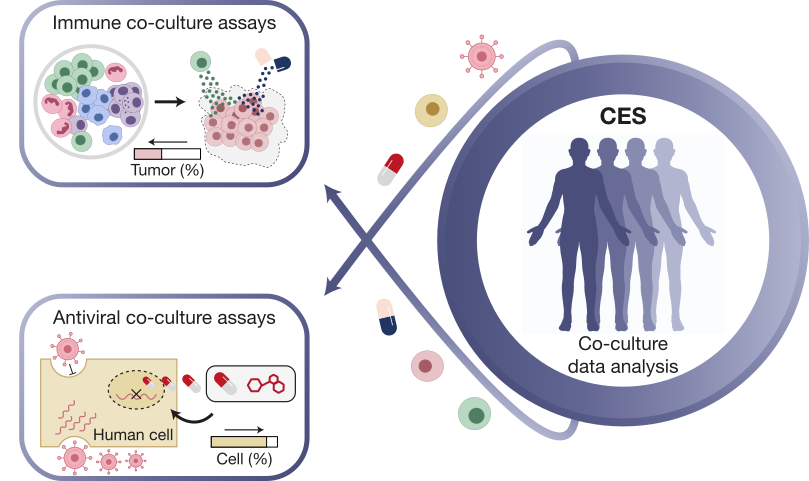
Rapidly quantify and prioritize compound activity in multicellular systems. CES distinguishes effector-mediated modulation from general toxicity, supporting applications across cancer immunotherapy and host-pathogen antiviral screens.

FAQ

General questions

The Co-culture Efficacy Score (CES) is a quantitative framework for measuring drug activity in complex multicellular systems. It integrates cumulative activity and maximal efficacy into a single interpretable score, separating general toxicity from true effector-mediated cytotoxicity.

For a complete breakdown of all pipeline output metrics (including nAUC, Peak, and toxicity flags), refer to the Documentation page

Therapeutic CES: This model quantifies overall co-culture drug efficacy. It favors compounds that maximize target cell elimination while actively penalizing compounds that compromise effector cell viability, thereby reflecting therapeutic potential in co-culture environments.

Mechanistic CES: This model isolates immunomodulation by adjusting for compound toxicity against effector cells. It captures drug activity that either enhances or inhibits effector-mediated cytotoxicity by mathematically filtering out artifacts caused by toxicity to the effector cell population.

Applicable to 3-condition setups (co-culture, target monoculture, and effector monoculture).

To upload your co-culture screening data successfully, please format your file according to the CES input requirements. The Documentation page provides detailed guidance on the required columns, file structure, and example input files.
A manuscript is currently in preparation. Please see the Cite page for updates.

Welcome to the CES analysis pipeline!

Upload your data using the sidebar menu. Review the format requirements below before running the analysis.

Annotation file format

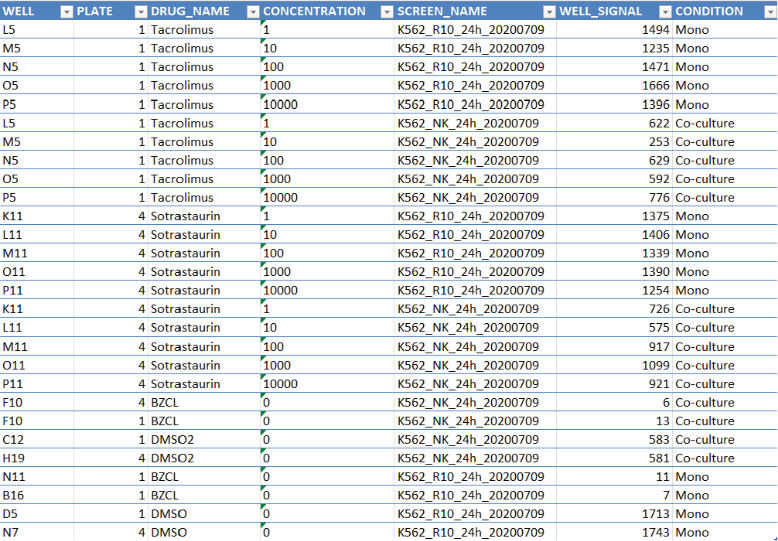
For raw plate reader signals. Normalized percent inhibition is computed automatically from your internal plate controls.

  • Required columns: WELL, PLATE, DRUG, CONCENTRATION, SCREEN, WELL_SIGNAL.
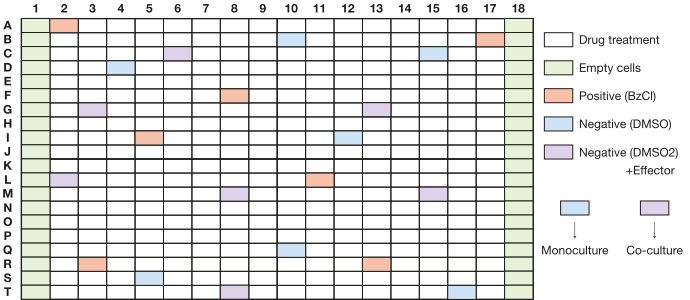
  • Control anchors: The DRUG column must include BZCL (or POS) and DMSO (or NEG). Co-culture plates require DMSO2 (or NEG2).
Processed data format

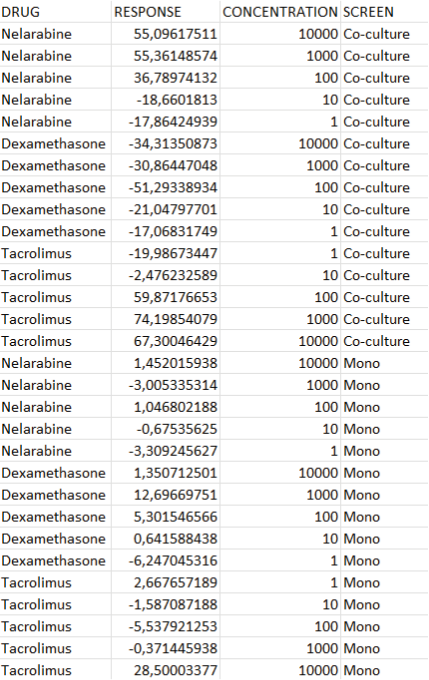
For data already normalized to percent viability or inhibition.

  • Required columns: DRUG, CONCENTRATION, SCREEN, RESPONSE.
  • Screen identifiers: Must contain Co-culture and Mono . An optional Control screen enables toxicity scoring.
Antiviral data format

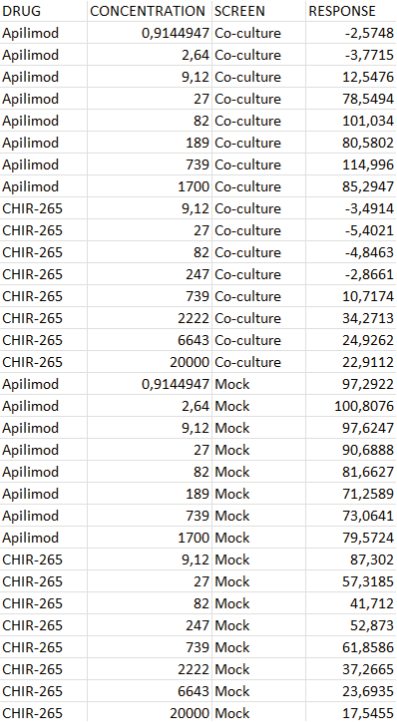
For evaluating viral inhibition against host cell viability.

  • Required columns: DRUG, CONCENTRATION, SCREEN, RESPONSE.
  • Screen identifiers: Must contain exactly Co-culture and Mock .
  • Response values: Host Cell Viability (%) for Mock and Viral Inhibition (%) for Co-culture.

Technical documentation

1. Overview

Quantifying compound activity in co-culture assays: CES is a computational framework that distinguishes compound toxicity from enhancement or inhibition of effector-mediated cytotoxicity in multicellular co-culture systems. Two scoring models are supported: a therapeutic model that penalizes effector-cell toxicity, and a mechanistic model that adjusts for it to isolate purely effector-mediated activity.

Flexible modeling of complex co-culture responses: The framework integrates condition-specific dose-response modeling, co-culture interaction profiling, and quantitative feature extraction to capture non-linear response landscapes and identify both enhancers and inhibitors alongside their most effective concentrations.

The pipeline operates in four stages:

  • Stage 1. Quality control and data processing. For annotation file uploads, plate-level quality metrics (Z-prime, robust Z-prime, SSMD) are evaluated and viability measurements are normalized to plate-specific controls. Dose-response curves are independently fitted per condition, interpolated onto a uniform dose grid, and combined into co-culture interaction profiles according to the selected scoring model.
  • Stage 2. Gaussian mixture modeling. Interaction profiles are modeled using a flexible mixture of up to four symmetric Gaussian components to capture non-linear response landscapes. Parameters are estimated by minimizing the sum of squared errors, with differential evolution as a fallback optimizer.
  • Stage 3. Feature extraction and CES computation. The fitted model yields the normalized area under the curve (nAUC), maximal response (Peak), and corresponding effective dose. These features are integrated into the final Co-culture Efficacy Score.
  • Stage 4. Output generation. The pipeline exports the CES, derived pharmacological features, effector toxicity classifications, and interactive dose-response visualizations with model diagnostics.

2. Input data

Upload your data as .csv , .xlsx , or .txt/.tsv . Column names are case-insensitive and common synonyms are automatically mapped (e.g., DRUG_NAMEDRUG , CONDITIONSCREEN ). Required columns depend on your chosen pipeline format.

Column reference
  • PLATE : Serial number (numeric) for multi-plate QC routing.
  • WELL : Standard identifier (e.g., A1, H24) for spatial mapping.
  • DRUG : Compound name. Internal controls are used for normalization and excluded from final tables.
  • CONCENTRATION : Dose in nanomolar (nM). A minimum of 3 doses per drug is required.
  • SCREEN : Condition label (Use Co-culture , Mono , Control , or Mock ).
  • WELL_SIGNAL / RESPONSE : Raw intensity measurements or pre-computed percentages.

If concentrations are not provided in nanomolar (nM), the DSS values reported in the results table may be inaccurate. All CES-derived metrics remain unaffected.

Internal plate controls

Controls anchor the 0% and 100% response baselines on each plate, enabling robust normalization and removing plate-to-plate variability.

  • Negative control (DMSO / NEG): Vehicle wells with no pharmacological effect (0% inhibition). For co-culture plates, label as DMSO2 or NEG2 .
  • Positive control (BzCl / POS): A highly toxic compound that eliminates essentially all cells (100% inhibition).
Drug sensitivity (Annotation file)

Select this option for raw plate-reader signals. The platform computes normalized percent inhibition using your internal plate controls.

  • Required columns: WELL, PLATE, DRUG, CONCENTRATION, SCREEN, WELL_SIGNAL.
  • Control identifiers: The DRUG column must contain positive ( BZCL / POS ) and negative controls ( DMSO / NEG ). Co-culture specific negatives must use DMSO2 or NEG2 .
Drug sensitivity (Processed)

Select this option if your dataset is already normalized to percent viability or inhibition.

  • Required columns: DRUG, CONCENTRATION, SCREEN, RESPONSE.
  • Screen identifiers: Must contain Co-culture and Mono baselines. An optional Control screen enables toxicity scoring.
Antiviral screening

Tailored for evaluating viral inhibition against host-cell viability.

  • Required columns: DRUG, CONCENTRATION, SCREEN, RESPONSE.
  • Screen identifiers: Must contain exactly Co-culture and Mock (mock-infected host cell viability).
FIMM layout / Breeze experimental files

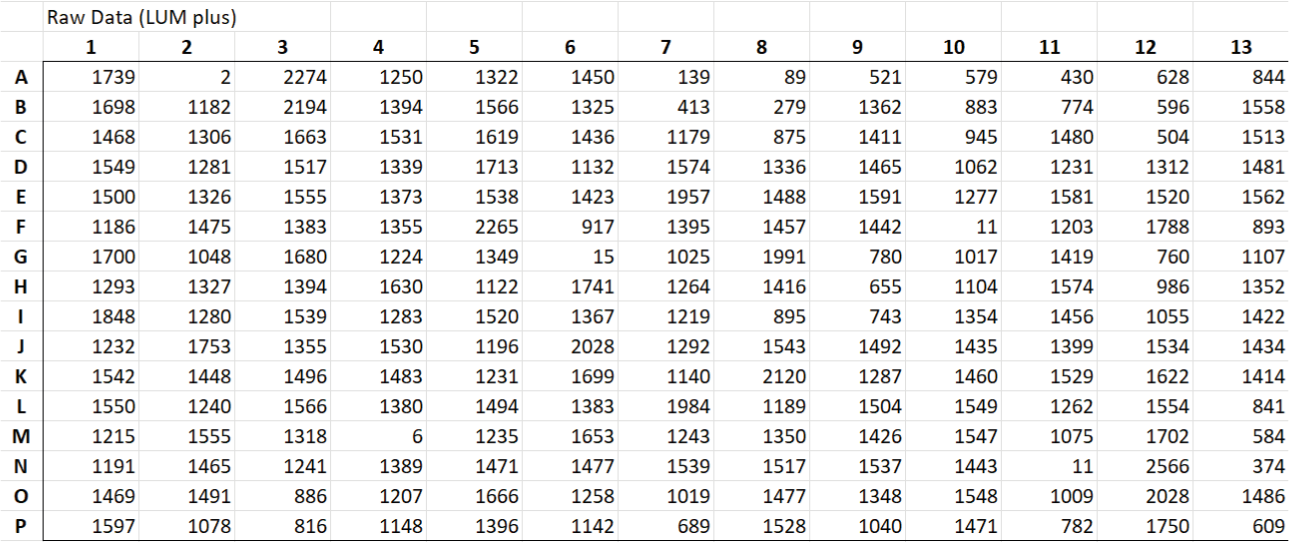
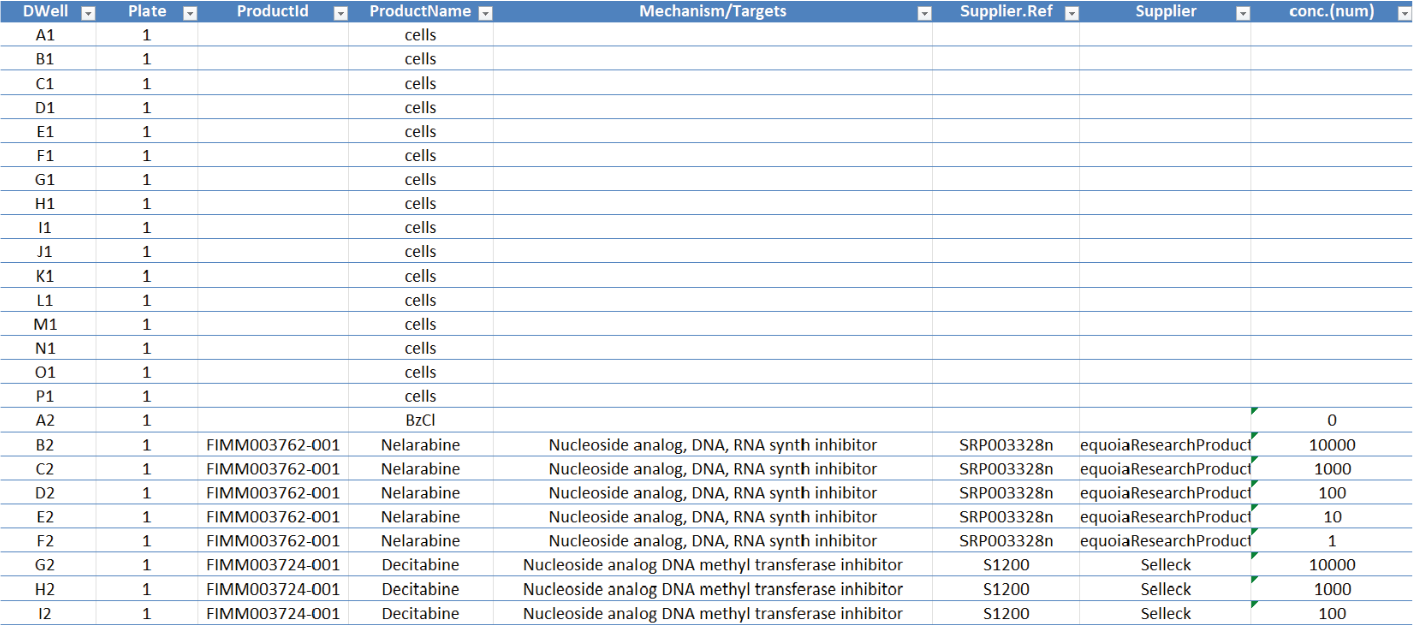
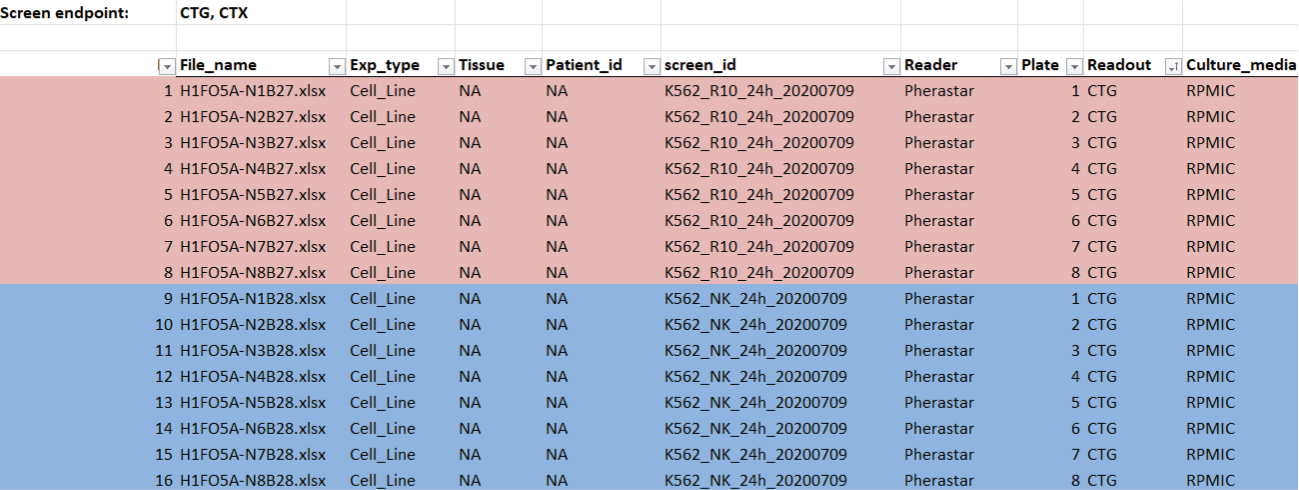
If you are processing raw data generated from FIMM or Breeze workflows, the pipeline requires three components to be merged before uploading:

1. Raw data

Standard plate reader outputs.

2. Annotation file

Well mapping & concentrations.

3. Experimental info

Breeze tracking format.

Helper Script: We provide a local R script to automatically parse and merge these three files into a single upload-ready format. Example raw plate files, an annotation file, and a Breeze experimental info file for a blood cancer cell line are also included for testing. Download the script and examples here


3. Outputs

Upon successful processing, the pipeline provides a structured results table and interactive visual diagnostics to facilitate the rapid identification of active compounds.

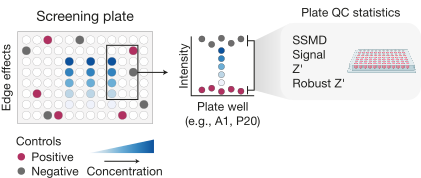
Plate QC statistics (Annotation only)
  • Plate_SSMD : Strictly Standardized Mean Difference between positive and negative controls.
  • Signal_Vs_BG : Signal-to-background ratio.
  • Z_Prime & Robust_Z_Prime : Standard assay quality metrics. Values < 0.5 automatically trigger a 'Bad' flag warning.
Results table metrics
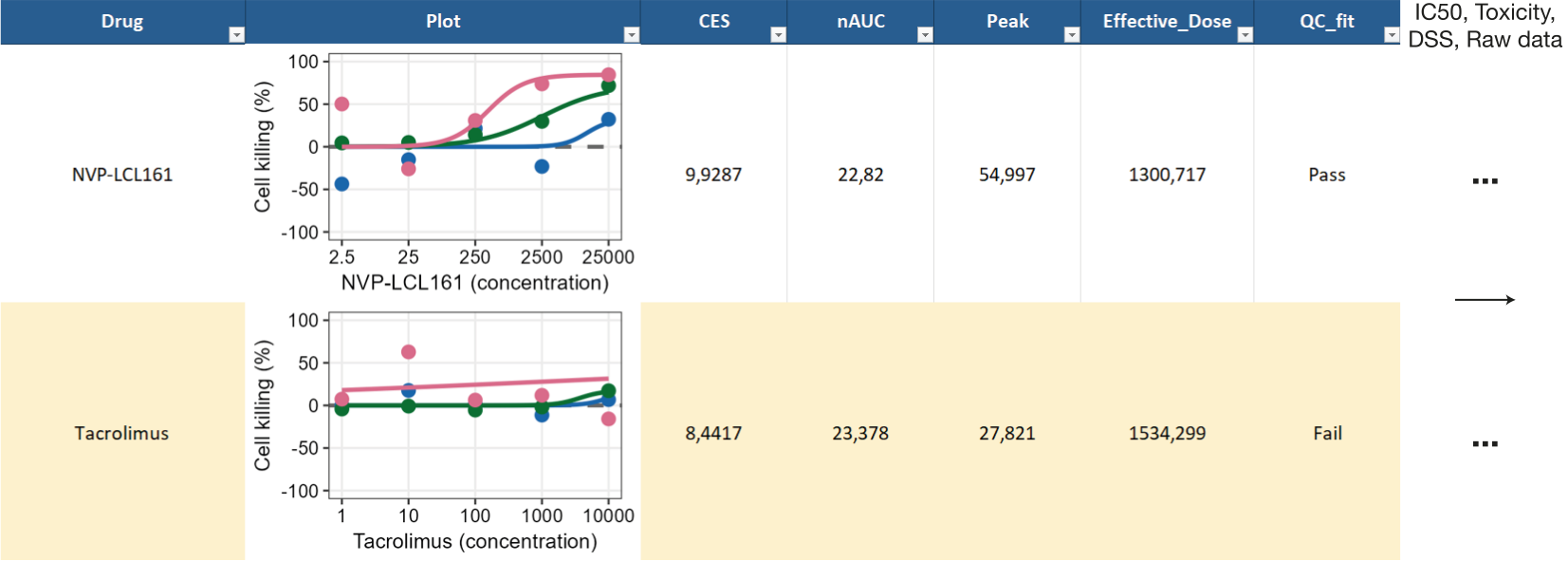
  • CES : Co-culture Efficacy Score. The primary ranking metric that integrates cumulative activity and maximal efficacy into a single value. Positive scores indicate compounds that enhance effector-mediated cytotoxicity (enhancers), negative scores indicate compounds that inhibit it (inhibitors), and values near zero reflect neutral compounds with no measurable modulation.
  • nAUC : Normalized area under the curve of the co-culture interaction profile. Captures the cumulative drug activity across all tested concentrations, providing a measure of overall dose-dependent efficacy rather than activity at a single concentration.
  • Peak : The maximal response amplitude observed in the fitted interaction profile. Represents the strongest modulation achieved by the compound at any concentration, regardless of whether the overall dose-response is monotonic or bell-shaped.
  • Effective_Dose : The concentration at which the Peak response occurs. Compounds achieving high Peak values at lower effective doses are generally more promising candidates, as they exhibit strong modulation at pharmacologically relevant concentrations.
  • IC50 : Half-maximal inhibitory concentration, estimated independently for each experimental condition (Co-culture, Mono, and Control where available). Provides a classical potency reference point to complement the CES-specific metrics.
  • Toxic : Categorical flag identifying compounds with generalized effector-cell toxicity, based on the Drug Sensitivity Score (DSS) of the Control condition exceeding a user-adjustable threshold. Only available when Control (effector-only) data is provided. Compounds flagged as toxic may show inflated co-culture efficacy due to direct effector killing rather than true immunomodulation.
  • QC_fit : Quality control status for the underlying dose-response model fits. A 'Fail' flag is triggered when the residual error of any condition-specific fit exceeds 30%, indicating that the model may not reliably represent the observed data for that compound.
  • Excluded compounds : Drugs automatically filtered by CES quality control. This occurs when the dose-response profiles across conditions exhibit biologically implausible behavior, such as concordant proliferative signals (strongly negative inhibition in both monoculture and co-culture), indicating assay artifacts rather than genuine pharmacological activity. Excluded compounds are retained in the results table for transparency but are not assigned a CES value.

Extended download: The exported file (.csv/.xlsx) expands the visual table to include individual condition Drug Sensitivity Scores (DSS), model error metrics, and dynamically scaled raw dose-response profiling measurements.

Interactive visualizations
  • Plate QC (Annotation only): Cross-screen boxplots displaying the distribution of raw well signals for each internal control type, alongside spatial scatter plots of signal intensity across plate columns. Together these reveal systematic issues such as edge effects, plate drift, or poor control separation that could compromise downstream scoring.
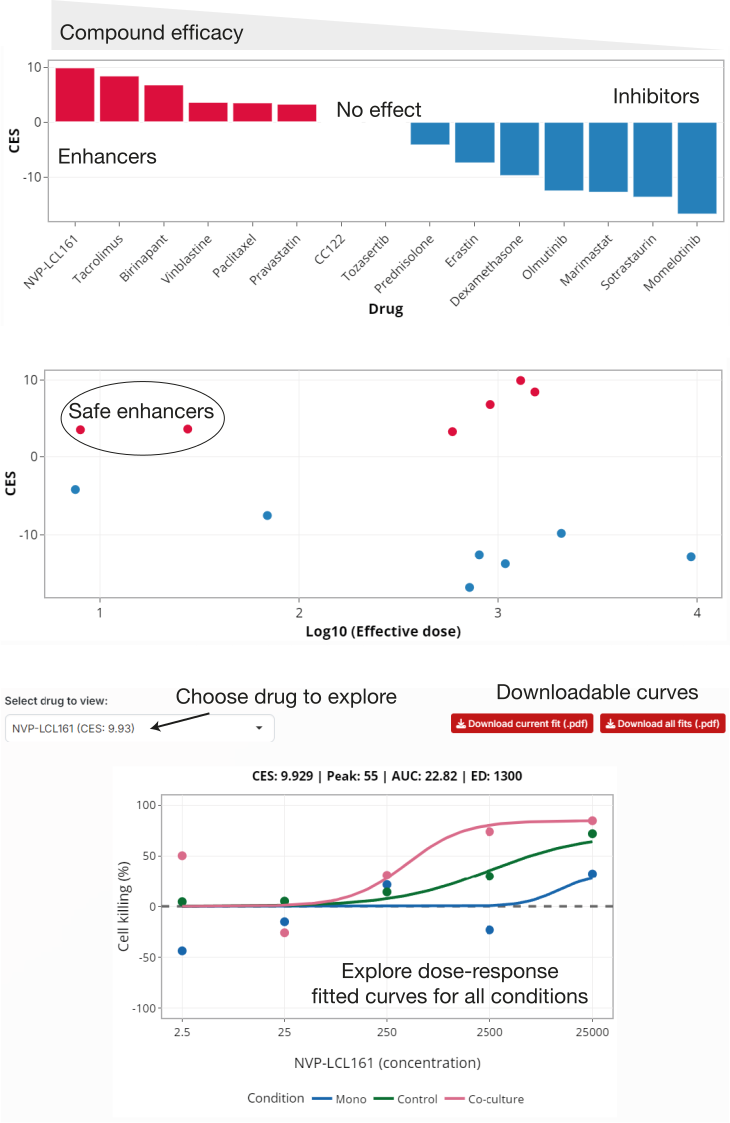
  • CES distribution: Ranked bar chart ordering all scored compounds from highest to lowest CES. Enhancers (positive CES) are colored red, inhibitors (negative CES) blue, and neutral compounds grey, providing an immediate visual summary of the overall screening landscape.
  • CES vs. Effective Dose: Scatter plot mapping each compound by its effective dose (x-axis, log-scaled) against its CES (y-axis). Compounds in the upper-left quadrant combine strong efficacy with low effective concentrations, highlighting the most promising candidates for further investigation.
  • Dose-response modeling: Per-compound interactive curve fits displaying the modeled dose-response across all experimental conditions. Raw data points are overlaid on the fitted curves, allowing visual inspection of model quality, condition-specific response differences, and the pharmacological behavior driving the integrated co-culture interaction profile.

4. Contact

For questions regarding the analytical framework or web application, please contact:

Citing CES

A manuscript detailing the CES methodology is currently in preparation.

Citation link and DOI coming soon

Source code and software

The CES computational framework and this interactive platform are entirely open-source. Explore the methodology or deploy it locally.

View repository on GitHub